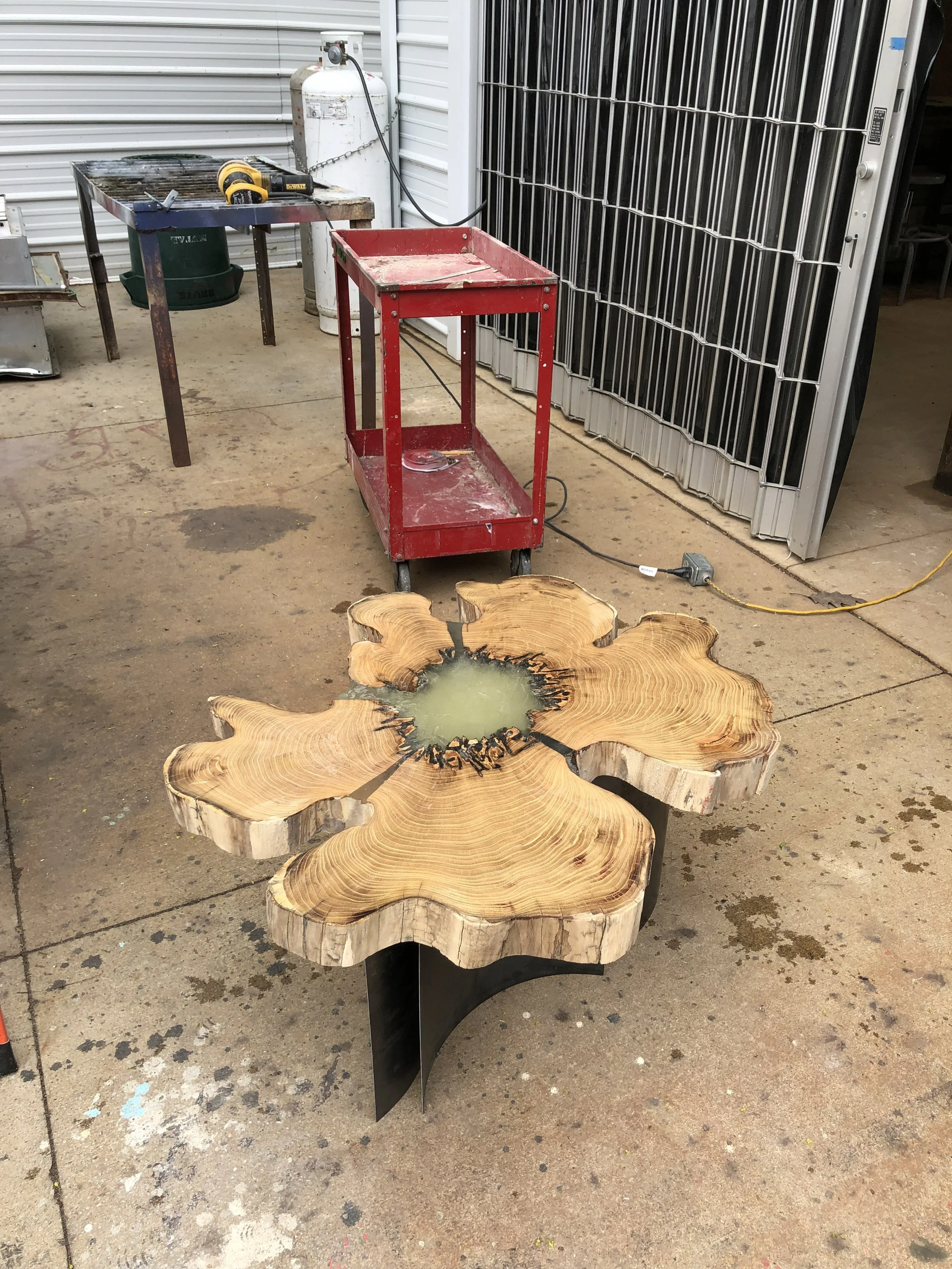

Hive Table
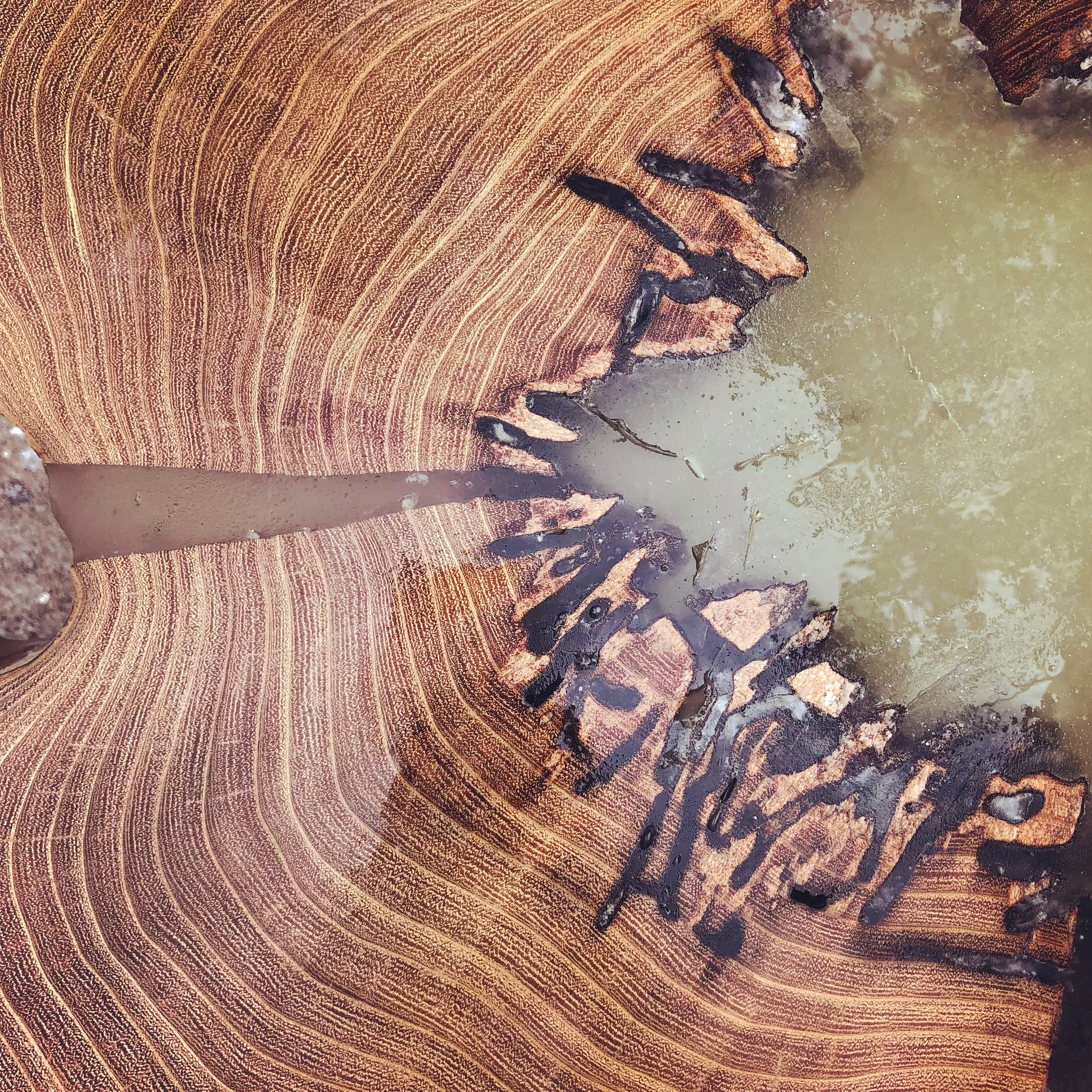
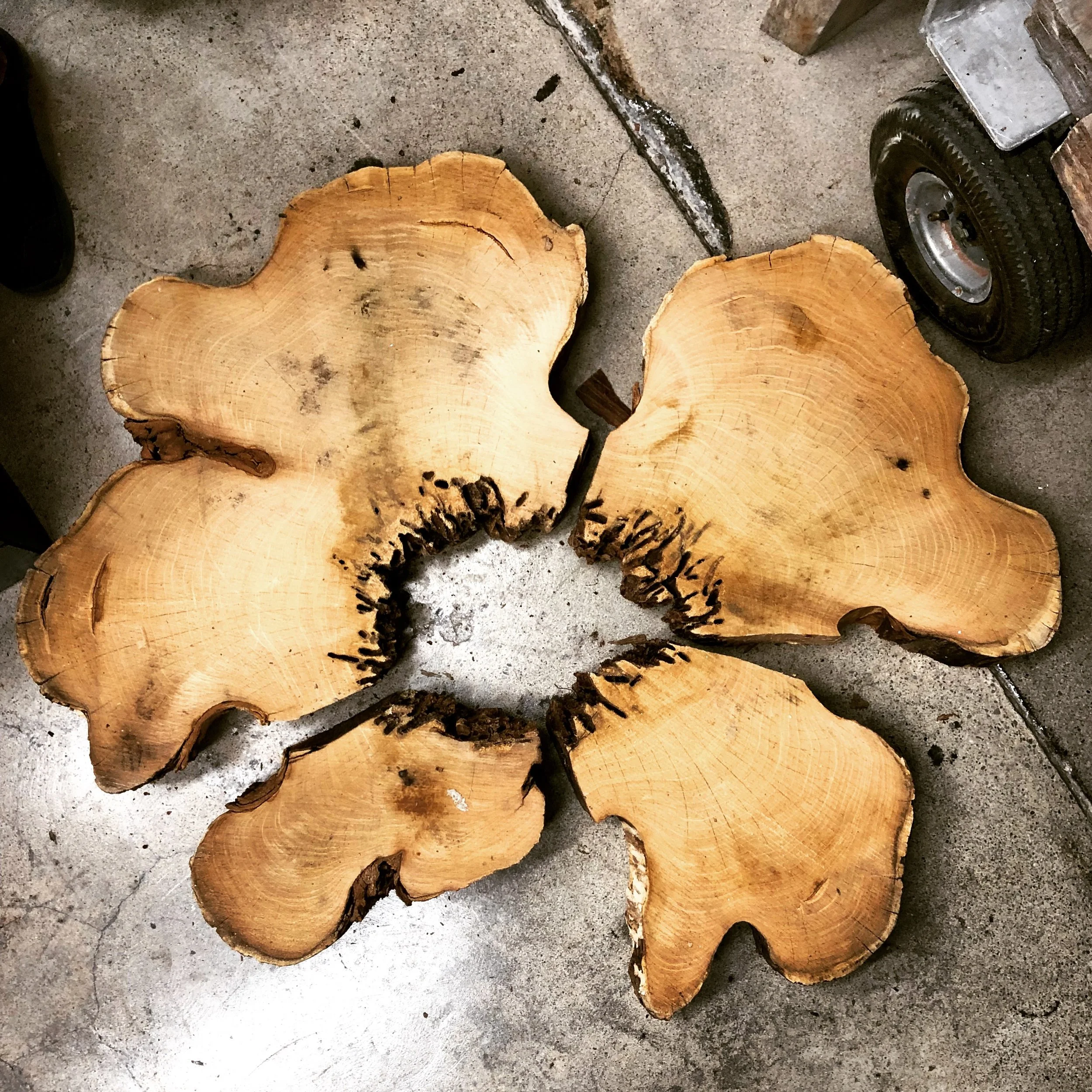
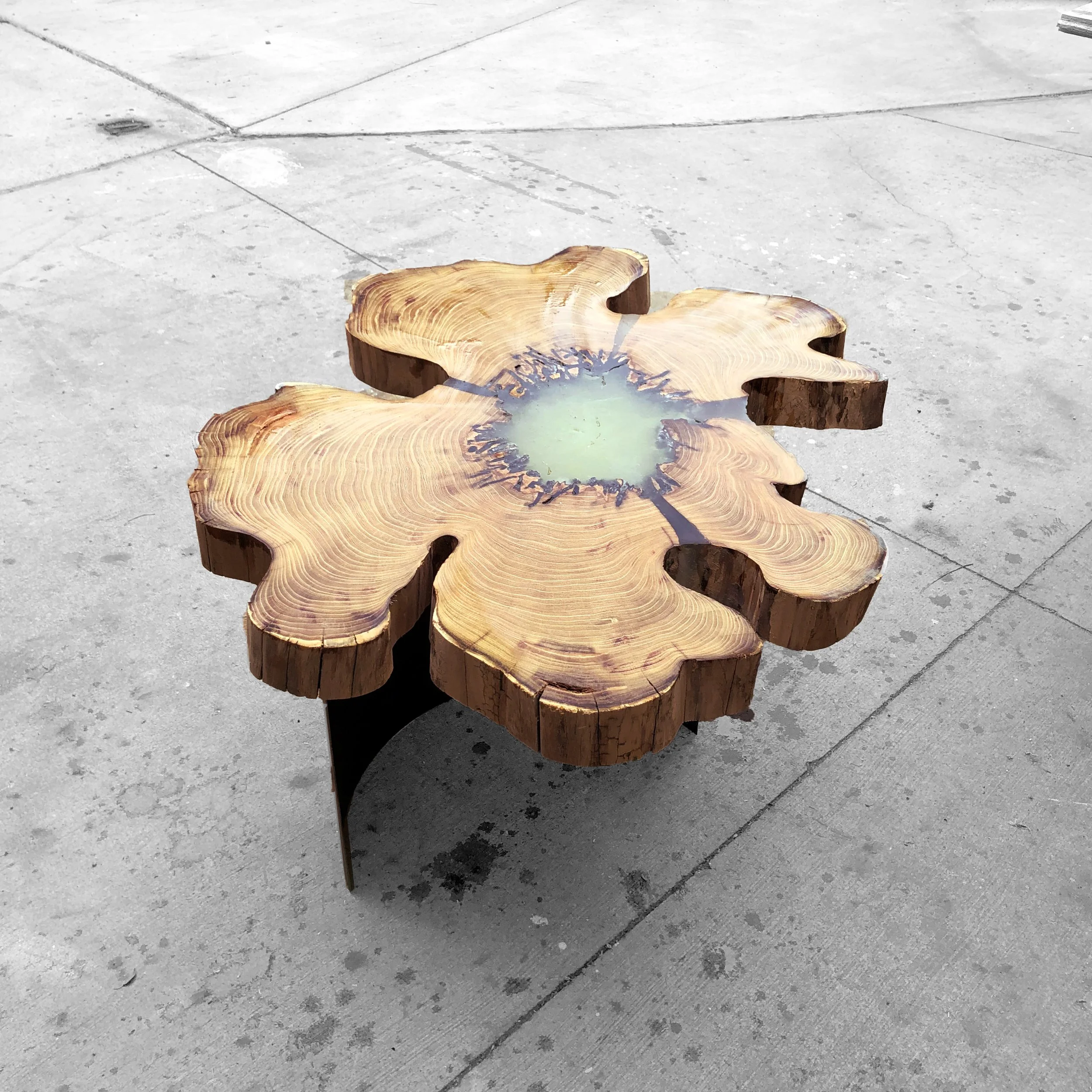
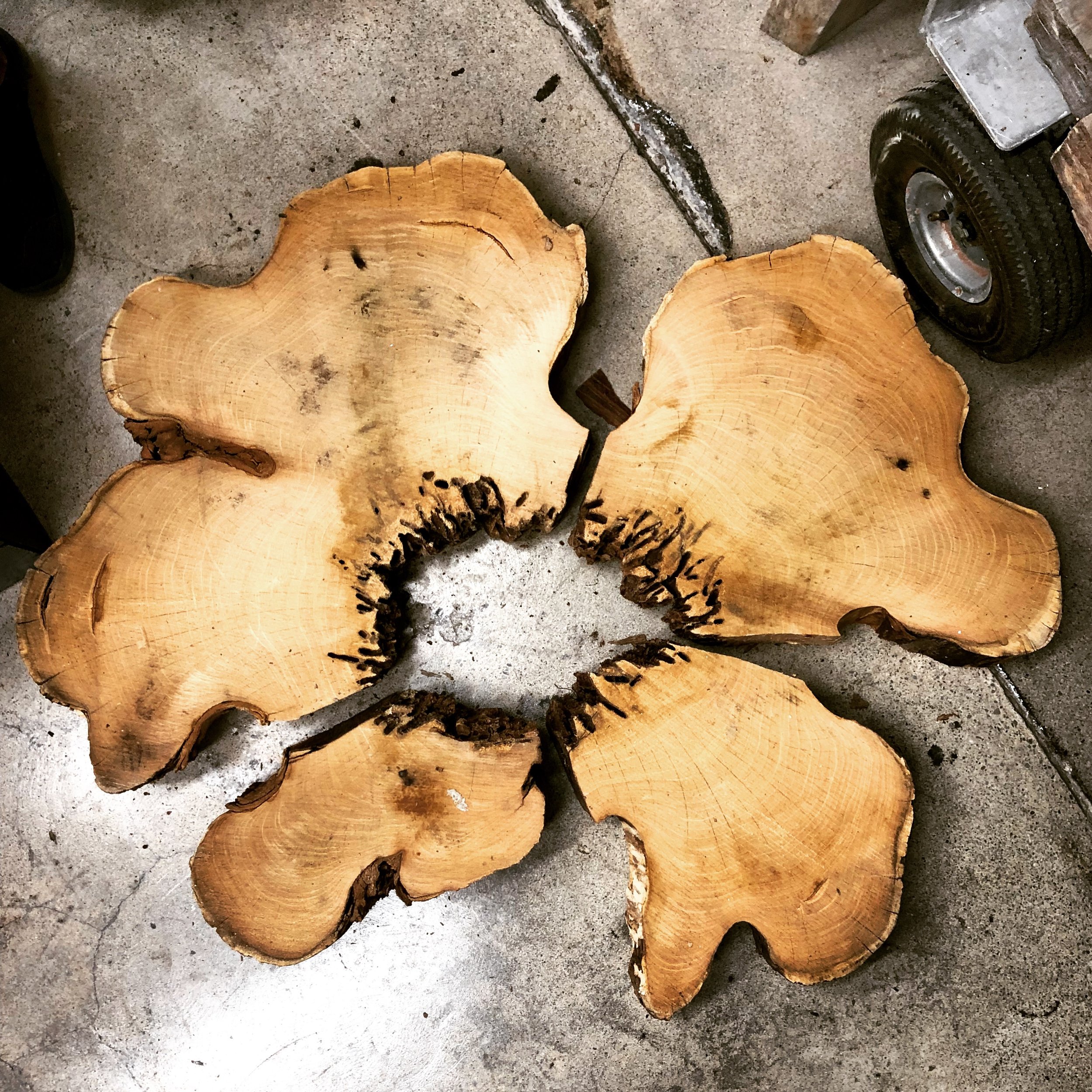
Discovery came by accident - wood overtaken by carpenter bees, riddled with intricate tunnels where insects had carved their pathways through solid timber. The damage was extensive, the structural integrity compromised, but the beauty was undeniable. Honeycomb networks threading through growth rings, the faint scent of honey still present in the galleries, decay transformed into pattern.
Most would have discarded this wood as unusable. We saw opportunity - a chance to preserve a unique moment in the life of the material, to capture wood in its afterlife and give it new purpose. The carpenter bees had created something we never could have designed: organic pathways that followed the wood's grain, responding to density and moisture content in ways that seemed almost intentional.
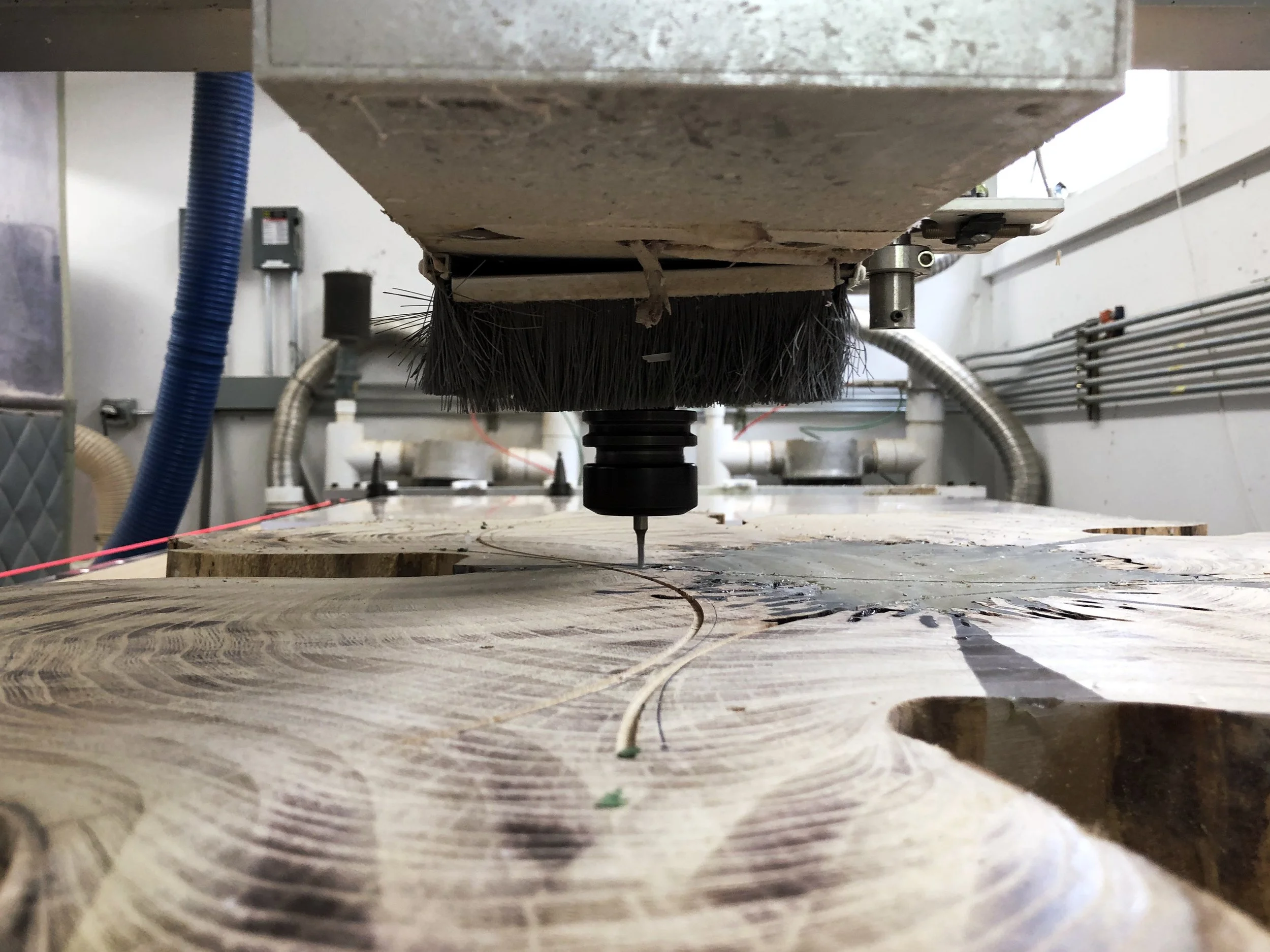
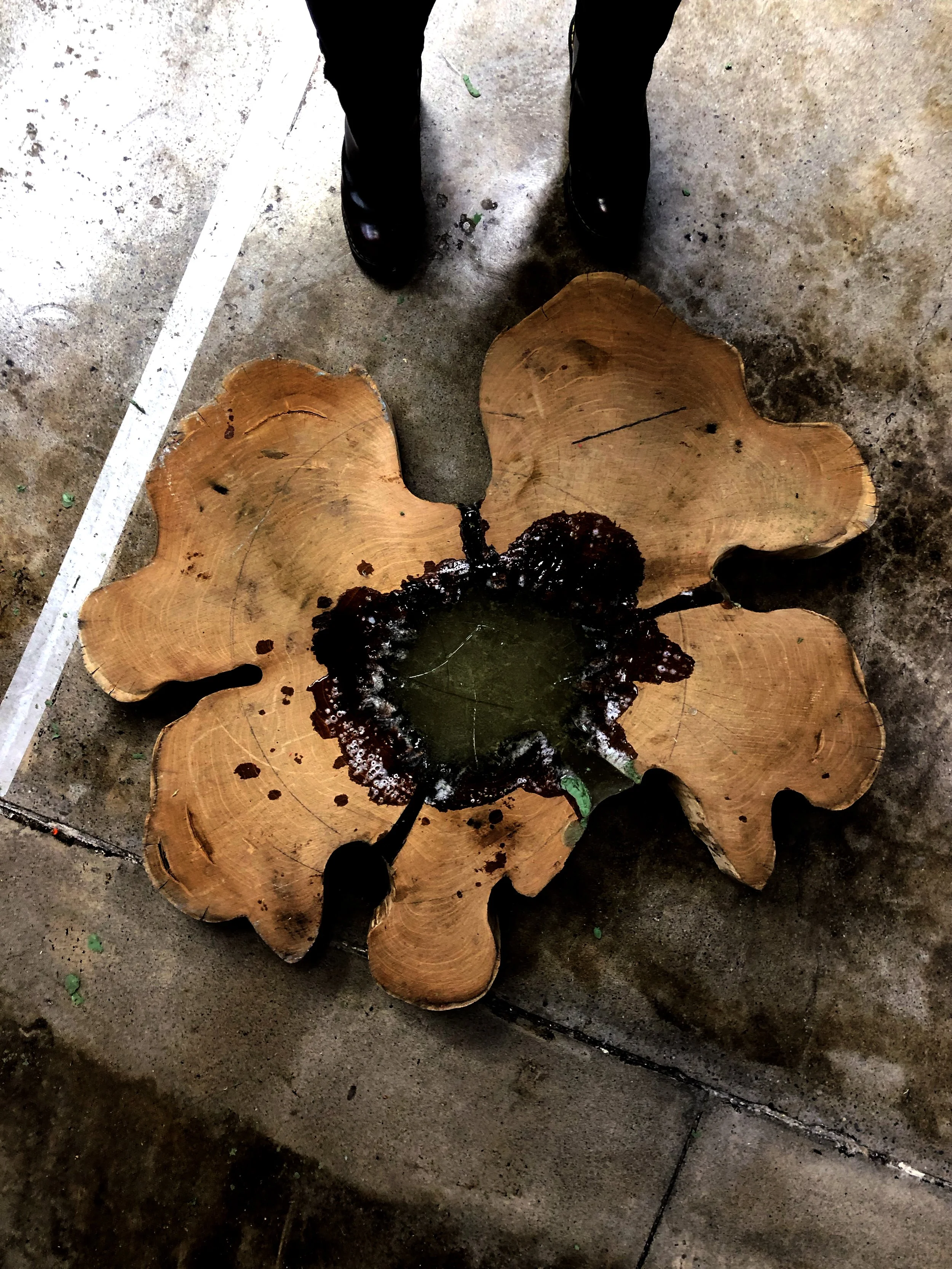
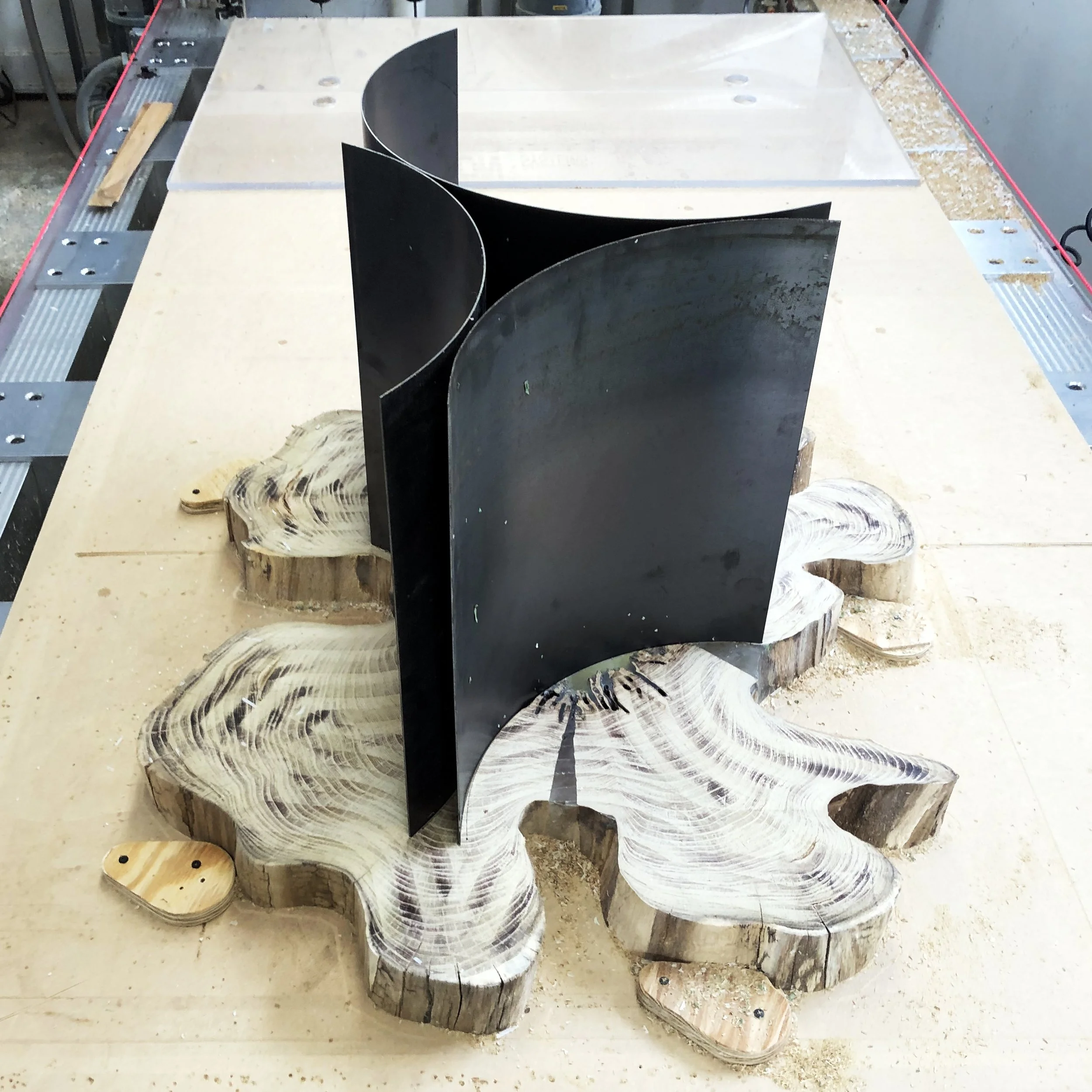
The challenge was structural. How to unite pieces so thoroughly compromised into a stable table? We turned to resin casting, filling the bee galleries and voids to reconnect the separated slabs. The translucent resin flows through the tunnel networks, simultaneously revealing the insects' work and binding the wood back together. What weakened the material now becomes its visual signature.
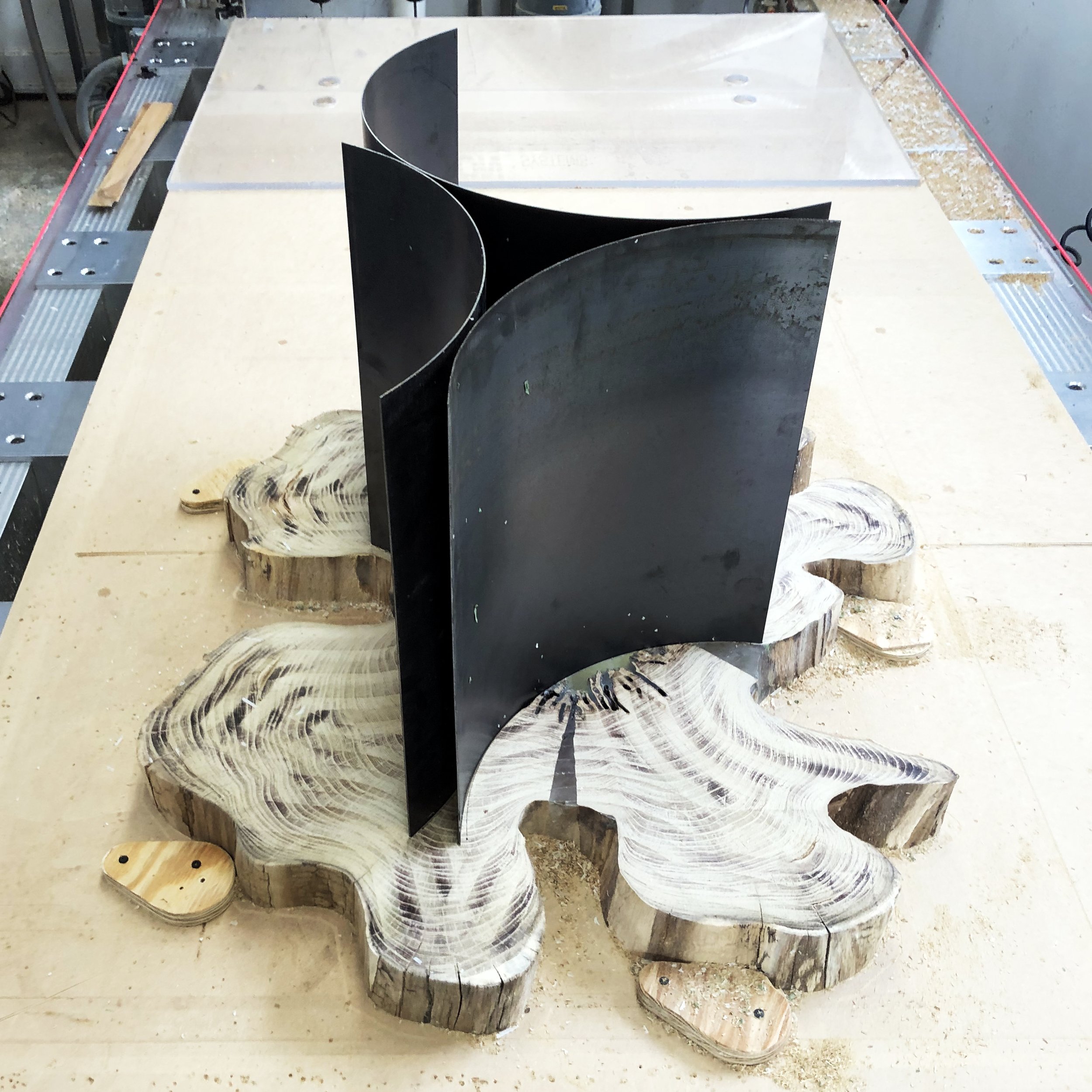
The steel base echoes the tree's growth rings - concentric forms that support without overwhelming. Minimal structure that allows light to pass beneath the table, highlighting the resin-filled pathways from below. The base disappears, directing attention to the remarkable surface above: centuries of growth interrupted by seasons of insect habitation, all preserved in wood and resin and time.
Project Type:
Custom Furniture Fabrication
Year Built:
2018
Location:
New York, NY
Collaborators:
Charlie Firestone
Photography:
Erin Pellegrino
Built for Possibility
-
Discovered as wood already claimed by carpenter bees, riddled with tunnels that followed grain patterns and moisture content. Most salvage yards would have rejected these pieces as structurally compromised. We saw the opposite: material transformed by insect habitation into something that couldn't be designed or replicated. The faint scent of honey still lingered in the galleries. Each tunnel told a story of the bees' patient work, turning solid timber into intricate pathways.
-
The resin work required precision - filling networks of tunnels without obscuring their form, binding separated pieces back into structural unity. Multiple pours built up gradually, the translucent material flowing through bee galleries to reconnect what had been carved apart. The steel base came next: concentric rings echoing the tree's growth patterns, minimal structure that supports without competing. Every detail calibrated to let the wood's remarkable surface remain the focus.
-
A functional table built from what appeared to be ruined material. The piece proves that damage and beauty aren't opposites - that decay can reveal patterns more compelling than perfection. Positioned where light can pass beneath, the resin-filled tunnels glow from below, highlighting the bees' pathways. A conversation piece that prompts questions about material, craft, and the unexpected collaborations between human makers and the natural processes that transform wood over time.
-
The resin preserves what would have continued to decay, freezing a specific moment in the wood's afterlife. The bee tunnels will remain exactly as they were - no further deterioration, no loss of structural integrity. The steel base will develop its own patina, subtle weathering that adds character. This table captures impermanence and makes it permanent, ensuring that the carpenter bees' unintentional artistry endures long after the insects themselves are gone.
Finding Form
At over 600 pounds, this table doesn't simply arrive - it's positioned, maneuvered, and settled into place with precision and respect for its weight.